
SWMS
Fire Sprinkler Installation Template (SWMS)
$66.00incl. GST
Delivered as a download link by email straight after payment.
✅ Product Description: Fire Sprinkler Installation SWMS
Install safely. Control pressure. Prevent falls. Stay compliant.
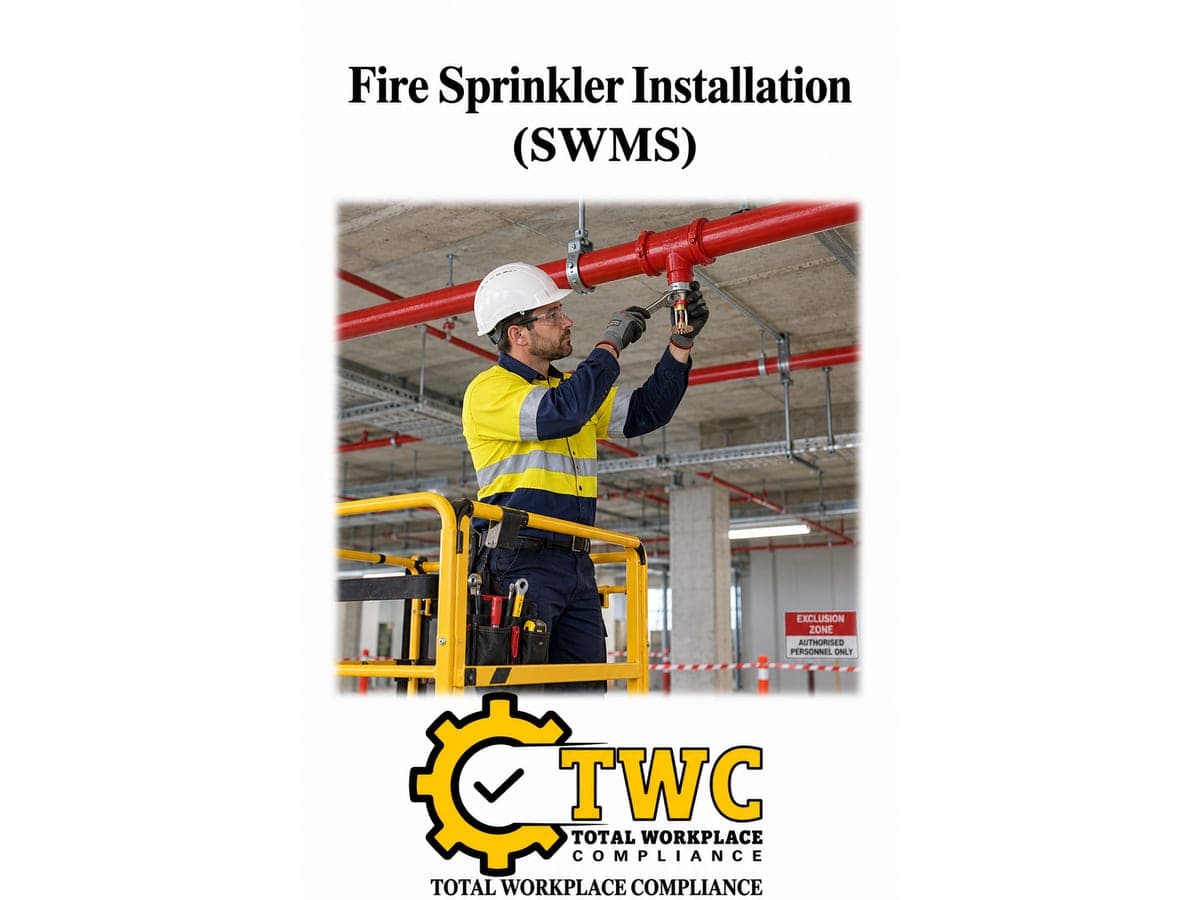
This SWMS for Fire Sprinkler Installation is designed to manage the hazards associated with installing water-based sprinkler pipework, hangers, fittings and sprinkler heads. It covers access at height, drilling and anchoring, cutting and threading pipe, hot work, connecting to existing systems, pressure testing, commissioning and handover.
With a strong focus on licensing, work at height, falling objects, silica dust, hazardous manual tasks, hot work, stored pressure and fire-system impairment, this template provides practical control measures for each stage of installation—helping businesses meet their Queensland WHS, plumbing and fire-protection obligations.
Suitable for licensed fire sprinkler contractors, plumbers, installers, builders, subcontractors, supervisors and project managers, this SWMS is practical, detailed and ready to tailor to the project and worksite.
✅ What This SWMS Covers
Planning, approved drawings, licensing and work coordination
Site inspections, service locating and asbestos-register checks
Delivery, unloading, stacking and handling of pipes and fittings
Exclusion zones, public protection and falling-object controls
Safe use of scaffolds, EWPs and industrial ladders
Setting out hangers, drilling anchors and controlling silica dust
Installing, supporting and securing sprinkler pipework
Cutting, threading, grooving and preparing pipes
Welding, brazing, soldering and hot-work permit controls
Electrical, alarm-panel and existing-service interfaces
Fire-system isolation, impairment notification and temporary protection
Pressure testing, stored-energy controls and water discharge
Commissioning, defect rectification, certification and handover
Housekeeping and emergency response for fire, falls, flooding and pressure injuries
Includes a detailed, step-by-step task breakdown with initial and residual risk ratings, control measures and assigned responsibilities for practical site use.
✅ Compliance and Legislation
Aligned with relevant Queensland requirements and guidance, including:
Work Health and Safety Act 2011
Work Health and Safety Regulation 2011
Plumbing and Drainage Act 2018
Plumbing and Drainage Regulation 2019
Applicable QBCC fire-protection and water-based fire-system licensing requirements
Construction Work Code of Practice 2021
Managing the Risk of Falls at Workplaces Code of Practice 2021
Hazardous Manual Tasks Code of Practice 2021
Welding Processes Code of Practice 2021
Managing Respirable Crystalline Silica Dust Exposure in Construction and Manufacturing of Construction Elements Code of Practice 2022
Applicable manufacturer instructions, approved designs and Australian Standards
Also includes requirements for general construction induction, applicable fire-protection and regulated-plumbing licences, EWP and scaffolding competencies, silica-control training, hot-work authorisation, pressure-testing competency and system commissioning.
✅ Key Features
Fire-sprinkler-specific installation hazards and controls
Covers the complete workflow from planning through testing and handover
Addresses licensing, system impairment and occupied-building interfaces
Strong focus on falls, silica, hot work, falling objects and stored pressure
Covers pipe handling, drilling, anchoring, cutting, threading and installation
Includes PPE, equipment, training and competency requirements
Includes emergency procedures for fire, flooding, falls and pressure-related incidents
Includes monitoring, authorisation, worker sign-off and revision sections
Suitable for commercial, industrial, residential and general construction projects
✅ Download Format
Microsoft Word—editable for your business, project and worksite
✅ Perfect For
Licensed fire sprinkler installers and contractors
Plumbers and water-based fire-system technicians
Builders and principal contractors
Commercial and industrial construction businesses
Fire-protection subcontractors
Site supervisors and project managers
WHS officers managing fire-protection, pressure, hot-work and work-at-height risks
More in SWMS